The medicines
GLP-1 pills vs shots: what the difference actually is
There's finally a real GLP-1 pill shelf, not just injections. In separate trials the shots — tirzepatide most of all — have led on weight loss, but no study has ever put a pill against a shot head-to-head. The choice is a trade-off, not a ranking.
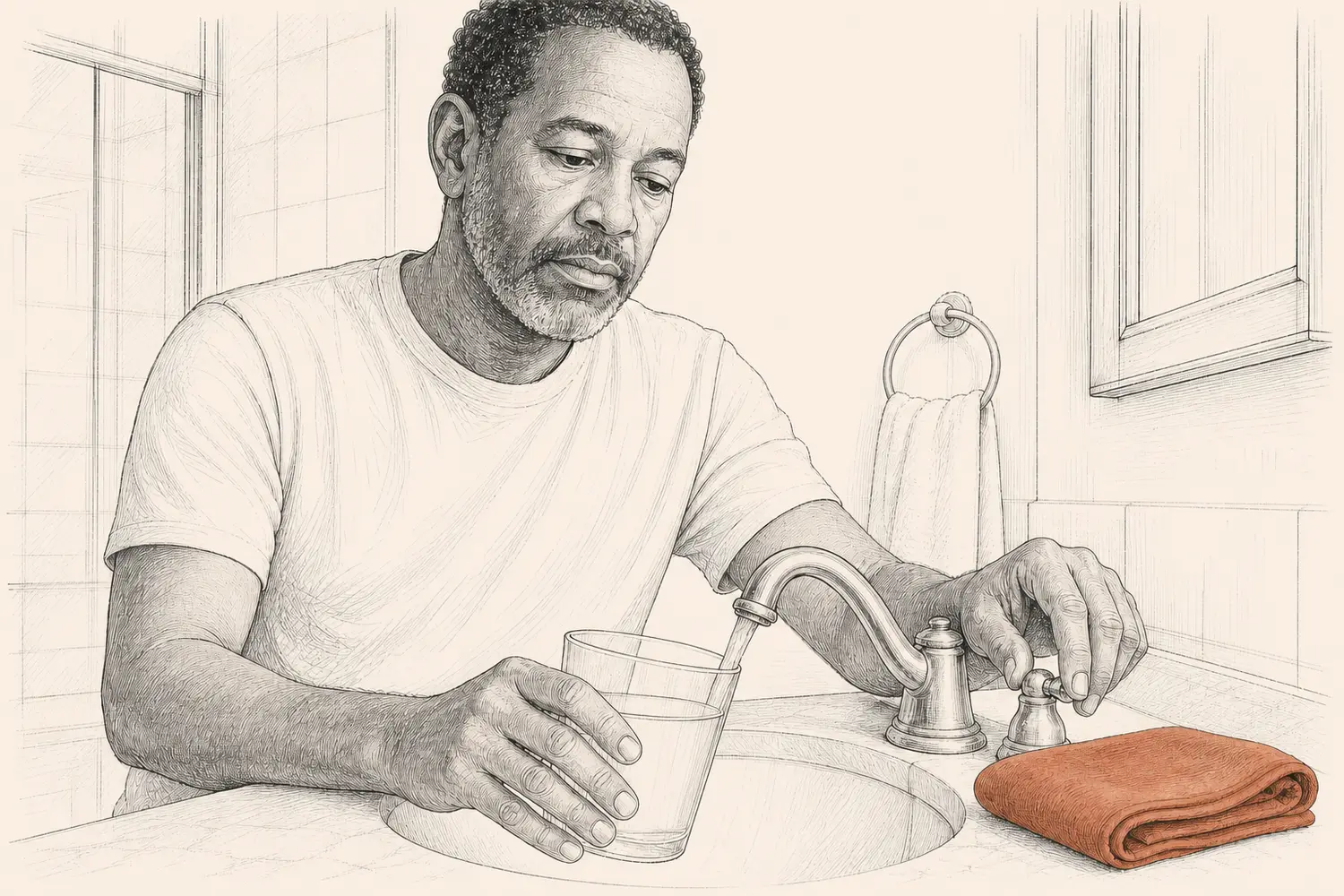
For years, the only real question about a GLP-1 was whether you could get past the needle. If you couldn’t, you were mostly out of luck — the drugs that worked came in a weekly injection pen, full stop. By mid-2026 that stopped being true. A person walking into a clinic could now, in principle, be offered a pill that does the same job: oral semaglutide 25 mg (marketed as the “oral Wegovy”), approved in December 2025, or orforglipron — brand name Foundayo — approved on April 1, 2026.
So the natural question arrives fast: is the pill as good as the shot? The honest answer isn’t yes or no. It’s that the two things being compared were never actually compared — and that the difference you’d feel every morning may matter as much as the difference on the scale.
What just changed on the shelf
The pills didn’t arrive all at once, and they aren’t interchangeable. Oral semaglutide has existed since 2017 as Rybelsus — but only for type 2 diabetes, and only at lower doses. It was never approved for weight loss. The weight-loss pill is a separate, higher-dose product (“oral Wegovy,” 25 mg) approved in December 2025. Orforglipron is different again: not a peptide at all, but a small molecule, approved for weight management in April 2026.
The pill shelf isn’t one thing. It’s a diabetes drug that isn’t approved for weight, a high-dose version that is, and a brand-new molecule that plays by different rules — all easy to blur together under the word “pill.”
Worth knowing: Rybelsus and the "oral Wegovy" pill contain the same molecule (semaglutide) — but only the higher-dose weight product is FDA-approved for weight management. The lower-dose Rybelsus is a diabetes medicine. Same drug; different approved use. Any decision to use one for something it isn't approved for belongs with a prescriber, not a web page.
What the trials actually show
Here are the numbers people are really asking about — the average body-weight loss each drug produced in its own phase 3 trial, next to placebo.
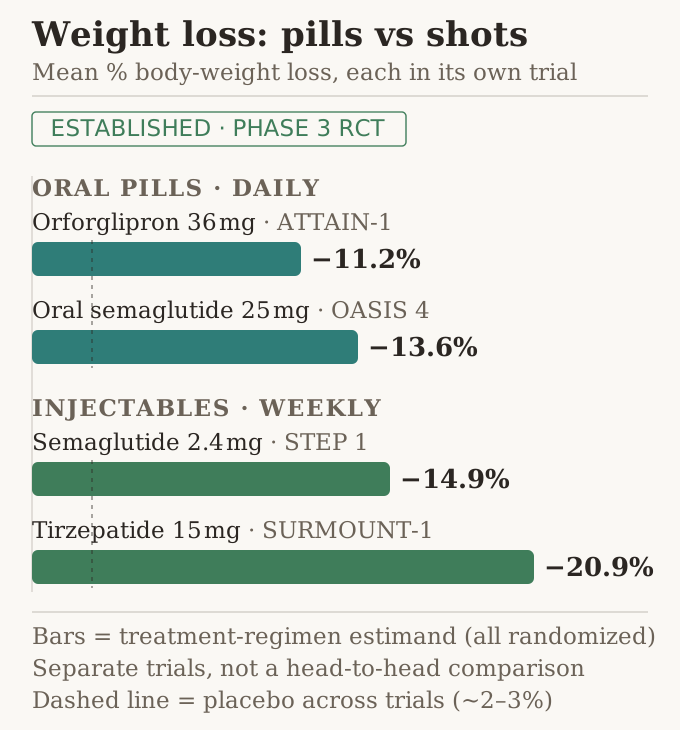
Two things are true at once here. First, every one of these options beats placebo by a wide, clinically meaningful margin — placebo lands around 2–3%, and the drugs land at four to ten times that. That claim is Established: each has a positive phase 3 randomized trial behind it. Second, there’s a clear ordering on the page — roughly 11% average loss for orforglipron, about 14% for oral semaglutide 25 mg, about 15% for injectable semaglutide, and north of 20% for tirzepatide — with the shot out in front and the pill at the back.
That ordering is real, but read it carefully. The oral-semaglutide bar shown is the treatment-regimen estimand — the way of counting that includes everyone who started the trial, even those who stopped the drug along the way — at about 14%; an investigational 50 mg oral dose reached about 15% in the OASIS 1 trial, so oral semaglutide’s ceiling is higher than the single bar suggests. And a “treatment-regimen” number versus an “efficacy” number (which leans on the people who stuck with the drug) can move a given result by a couple of points — the figure deliberately uses the more conservative treatment-regimen version for all four so they line up as fairly as possible.
Why you can’t call it a race
The tempting move is to read that chart as a leaderboard. It isn’t one, and this is the single most important thing to understand about the whole comparison.
No trial has ever randomized a pill against a shot. Every number above comes from a different study, with a different set of patients, run under different rules. The gap between the bars is a cross-trial inference — not the result of anyone lining these drugs up and letting them compete.
That’s why we grade the “injectables win” claim as Supported but limited, not Established. The pattern is consistent enough to take seriously — the injectables, and tirzepatide especially, have led on average in their own trials. But a review of this exact question put it plainly: the absence of a direct comparison makes a firm ranking premature. The one place randomized head-to-heads do exist is drug-against-drug within the same route — comparisons we cover in semaglutide vs tirzepatide — never pill against shot.
It’s also worth resisting a neat story about why tirzepatide leads. It hits two gut-hormone receptors (GIP and GLP-1) rather than one, and that dual action is a plausible reason it produces more loss. But pinning the specific cross-trial gap on mechanism is speculative — a reasonable hypothesis, not a proven cause.
The difference you’ll feel every morning
The efficacy chart is silent on the thing that, for a lot of people, decides everything: what taking the medicine is actually like day to day. Here the pills and shots split in ways that don’t map onto the scale at all.
| Option | Route & cadence | Food / water timing | Approved for weight (US) |
|---|---|---|---|
| Orforglipron (Foundayo) | Daily pill | None — any time, with or without food | Yes (Apr 1, 2026) |
| Oral semaglutide 25 mg (“oral Wegovy”) | Daily pill | Empty stomach, small sip of water, then wait before anything else | Yes (Dec 22, 2025) |
| Oral semaglutide 7/14 mg (Rybelsus) | Daily pill | Same empty-stomach rule | No — type 2 diabetes only |
| Injectable semaglutide (Wegovy) | Weekly injection | None | Yes (2021) |
| Injectable tirzepatide (Zepbound) | Weekly injection | None | Yes (2023) |
The finicky one is oral semaglutide. Because semaglutide is a peptide — the kind of molecule the gut normally digests — the pill depends on an absorption enhancer that only works on an empty stomach. The FDA label spells out why it’s so particular: take it fasting, with no more than about 4 oz (120 mL) of plain water, then nothing else — no food, no coffee, no other pills — for at least 30 minutes, every single day. Miss the ritual and the dose largely doesn’t absorb. That’s not a coaching tip for your own regimen; it’s the reason adherence is a real, daily project with this pill.
Orforglipron was engineered around exactly that problem. As a non-peptide small molecule, it doesn’t need the empty-stomach trick, which is why its label carries no food or water restrictions and it can be taken any time of day. And the injectables sidestep the timing question entirely — once a week, food or no food — at the cost of, well, a weekly injection.
What “on average” hides
Averages are the wrong unit for a single human. A more honest way to read these trials is: what fraction of people hit a real target — say, losing at least 10% of their body weight?
| Option (own trial) | Reached ≥10% body-weight loss |
|---|---|
| Tirzepatide 15 mg (injectable) | ~75% |
| Injectable semaglutide 2.4 mg | ~69% |
| Oral semaglutide 25 mg | ~63% |
| Orforglipron 36 mg | ~55–60% |
The ordering echoes the average-loss chart — about three-quarters of people on injectable tirzepatide cleared that 10% bar (~75%), against roughly 69% on injectable semaglutide, about 63% on oral semaglutide 25 mg, and somewhere around 55–60% on orforglipron — and it comes with the same caveat, since every figure is from a separate trial. But notice what it also says: more than half the people on the “weakest” option cleared 10%. No pill is a consolation prize, and no shot is a guarantee — individual results scatter widely around every one of these numbers, which is why a clinician tracks your response rather than betting on the trial average.
If pregnancy is anywhere on the table, this is a clinician conversation first. GLP-1 and GIP/GLP-1 medicines are not used in pregnancy and are generally stopped before a planned one — so contraception is decision-relevant here, and tirzepatide's delayed gastric emptying can make oral birth control less reliable. None of that is something to sort out from a web page; see GLP-1 medicines and birth control and bring it to your prescriber.
Coverage, and the honest bottom line
Coverage is its own variable. Whether a plan covers an oral or an injectable GLP-1 — and for which indication — varies a lot, and can differ between the two even for the same person. That's a real input to the decision, but it's a policy-and-eligibility question for your plan and prescriber, not something to solve by hunting for the cheapest source. Our coverage checker walks through the eligibility framing, and the 2026 coverage cliff explains why plans have been tightening.
So, pill or shot? The evidence supports a useful summary and refuses the headline. What it supports: all of these work, the injectables have led on average in their own trials, and the practical trade-offs are large and personal. What it won’t support: a clean “the shot wins,” because nobody has run that race.
For one reader, needle avoidance and a once-daily pill with no food rules is worth trading a few points of average loss. For another, the largest expected loss and a once-weekly cadence beats a daily habit. Both are rational; neither is a verdict a website can hand you. The productive step is to bring these specific trade-offs — route, cadence, the food-timing burden, tolerability, coverage — to a clinician, using our comparison of the oral GLP-1 options and the orforglipron evidence page as a starting point, and let the decision be yours and theirs together.
Evidence current as of July 8, 2026. Regulatory approvals and dates are US-specific and stated as of this review; approvals outside the US differ and change. This article has no commercial stake in any drug, brand, or pharmacy, and none of it is medical advice or a recommendation to start, switch, or request any specific medicine.
Frequently asked
- Is the GLP-1 pill as effective as the shot?
- On average, no — but it's closer than the headlines suggest, and the comparison is imperfect. In their own separate trials, injectable tirzepatide produced the largest average loss (about 21% at the highest dose), injectable semaglutide about 15%, oral semaglutide 25 mg about 14%, and orforglipron about 11%. Crucially, no study has ever randomized a pill against a shot, so this is a cross-trial pattern, not a race result. For some people the daily-pill convenience outweighs a few percentage points of average loss — a conversation for a clinician.
- Which GLP-1 pill causes the most weight loss?
- In separate phase 3 trials, oral semaglutide 25 mg averaged more loss than orforglipron (about 14% vs about 11%, treatment-regimen estimand). An investigational 50 mg oral-semaglutide dose reached about 15% in the OASIS 1 trial. But orforglipron can be taken any time with no food rules, while oral semaglutide requires an empty stomach — so "most loss" and "easiest to live with" aren't the same pill.
- Why does oral semaglutide have to be taken on an empty stomach?
- Semaglutide is a peptide, and peptides are normally broken down in the gut. The pill relies on an absorption enhancer that only works when the stomach is empty, which is why the FDA label requires taking it fasting with no more than about 4 oz (120 mL) of plain water, then nothing else for at least 30 minutes. Orforglipron is a non-peptide small molecule and doesn't need that, which is why it carries no food or water restrictions.
- Is orforglipron (Foundayo) approved for diabetes?
- Not as of this review (July 2026). The FDA approved Foundayo on April 1, 2026 for chronic weight management in adults with obesity, or overweight plus a weight-related condition. A diabetes indication had not been approved at the time of writing.
- Are pills safer than shots?
- There's no evidence that the route itself makes a GLP-1 safer. These are the same drug class, and they share the same safety profile whether swallowed or injected — nausea and other gut effects are the most common in every trial. But safety isn't only about the gut: the class also carries less-common, more serious labeled risks — acute pancreatitis and gallbladder or biliary disease among them — and a labeled contraindication that has nothing to do with route, a personal or family history of medullary thyroid carcinoma or MEN 2. Severe, persistent abdominal pain is a red flag that warrants urgent care rather than waiting it out. Avoiding a needle is a real preference, but it hasn't been shown to change safety or weight outcomes. Any safety judgment — including whether the class fits your history at all — belongs with a prescriber who knows it.
Sources (9)
Every claim on this page traces to a primary source — and we sell you nothing. No sponsors, no affiliate links, no ads.
- 5 randomized trials
- 2 news / agency
- 1 FDA labels
- 1 reviews
More like this