Evidence journey
The Food Noise Came Back on Maintenance: What It Means (and What It Doesn't)
You hit goal weight, you're still taking the drug, and the hum of thinking about food is back. The fear is always "it stopped working" or "I failed." The maintenance trials point to a third, calmer answer.

It usually arrives quietly, months after the number on the scale stopped being the problem. You hit your goal weight. You are still taking the drug, same dose, same day of the week. And then one afternoon you notice the hum is back — the low background chatter about what’s for dinner, the second helping that suddenly looks appealing again, the snack you weren’t thinking about until you were. The food noise that went blessedly silent has started talking.
Almost everyone reaches for one of two sentences in that moment: the drug stopped working, or I failed. Both land like a verdict. The reason this page exists is that the evidence lets us answer both honestly — and for most people, the honest answer is: probably neither.
A returning appetite on a steady dose is far more often a biological event than a moral one. The trials, the physiology, and the definition of the condition itself all point the same way — and none of them point at your character.
First, the fear you can mostly set down: “it stopped working”
The panic gets one thing exactly backwards. The strongest maintenance data we have run in the opposite direction from “wearing off.” On a steady dose, the trials show weight loss slows, plateaus, and is then held.
The clearest single picture is STEP 5, a two-year randomized trial. On continued semaglutide, mean weight fell about 15.6% by week 52, flattened into a plateau around week 60, and then barely moved for the entire second year — landing at −15.2% at week 104, against −2.6% for placebo. That is a change of four-tenths of a percentage point across the whole second year on the same steady dose. Whatever “the drug stopped working” is supposed to look like, this is the opposite of it. (Established — phase 3 RCT.)
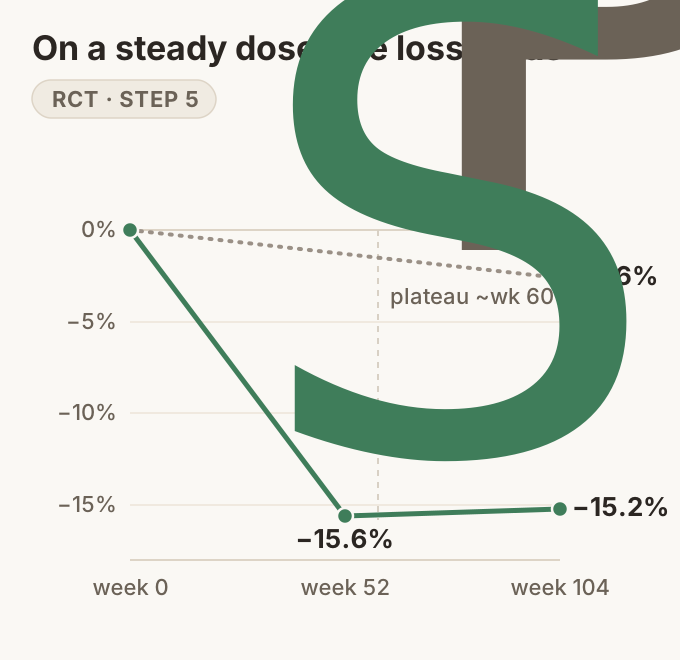
And STEP 5 isn’t alone. The most direct test of “does it keep working” is a withdrawal trial: take people who’ve lost weight, keep some on the drug, switch others to placebo, and watch. In STEP 4, the people who kept taking semaglutide lost a further 7.9% over the next year while the placebo-switchers regained. In SURMOUNT-4, the people who kept taking tirzepatide lost a further 5.5% — and 89.5% of them held onto at least 80% of the weight they’d already lost, versus 16.6% of those switched to placebo. (Established — large RCTs.)
| Trial | Who kept taking the drug | What happened to their weight |
|---|---|---|
| STEP 5 (semaglutide, 2 years) | stayed on the maintenance dose | plateaued ~week 60, held to −15.2% at week 104 (placebo −2.6%) |
| STEP 4 (semaglutide) | continued after a 20-week run-in | lost a further 7.9% (weeks 20→68); net −17.4% from baseline |
| SURMOUNT-4 (tirzepatide) | continued to week 88 | lost a further 5.5%; 89.5% kept ≥80% of their loss |
So the pharmacology, in trial after trial, is still doing its job while you’re standing at the fridge feeling like it isn’t. Those two facts don’t contradict each other — which is the whole puzzle, and the next section is the answer to it.
Why the appetite comes back anyway: the plateau is physiology
If the drug is still working, why is the food noise louder than it was six months ago?
Because your body is doing exactly what bodies do when they lose weight: defending themselves. Weight loss triggers durable, well-documented counter-regulation. Hunger-signaling hormones rise, energy expenditure falls, and it persists. Long-term human studies bear this out directly: a year after diet-induced weight loss, appetite hormones stayed altered in a direction that drives regain (Sumithran and colleagues, NEJM 2011), and a suppressed resting metabolic rate was still measurable six years later in the well-known “Biggest Loser” cohort (Fothergill and colleagues, 2016). This is the same headwind that makes weight regain after dieting so brutally common. (Established — primary human data on persistent metabolic adaptation.)
What GLP-1 drugs do is weaken that appetite-feedback circuit. That’s precisely why the loss window on these medicines lasts far longer than dieting does — one modeling analysis put the time-to-plateau on semaglutide or tirzepatide at roughly 24 months, versus something closer to 6–12 for calorie restriction alone. But “weaken” is the operative word. The circuit is turned down, not switched off, so appetite eventually climbs back up until your intake and the drug’s effect meet at a new equilibrium. (Supported but limited — mechanistic modeling, a preprint, resting on established adaptation physiology.)
The plateau is the sound of your body settling at a lower defended weight — not the medicine quitting. The appetite you feel returning is the counter-pressure the drug is holding against, not proof the drug let go.
There’s a nearby claim worth handling carefully, because the internet loves it: the idea that the drug builds tolerance and the weight effect simply fades. The honest grade there is emerging and disputed. It has been proposed that the gastric-emptying slowdown these drugs cause can attenuate over weeks to months, with the central appetite effect appearing more durable, but that is a reported mechanism rather than a settled one. Crucially, there is no controlled data showing the weight effect wears off on a steady dose, and the maintenance trials argue directly against it. So “tolerance” is not a safe explanation to reach for; the sustained-effect evidence is stronger and more specific.
One pattern, though, does point somewhere different, and it’s worth naming so nobody is falsely reassured. The physiology above describes a gradual drift, appetite easing back over weeks and months. A relatively abrupt return, or one that coincides with a new pen, a fresh refill, or a suspected storage, handling, or product or supply change, is a reason to check the mechanics rather than the biology: that the medicine is being injected, stored, and handled as the label directs, and that it’s the same product you had before. If any of that is in doubt, the people to ask are your prescriber or pharmacist. This is a delivery-and-storage check, not a dose question.
“Managed, not cured”: why this was always going to happen
There’s a deeper reframe underneath the physiology, and it’s the one that actually dissolves the shame.
Under the 2025 Lancet Commission framing — a definition endorsed by 76 organizations — clinical obesity is a chronic, systemic disease. And the defining feature of the withdrawal trials is what they show when the drug is removed: the condition comes back. Put those together and a returning appetite while you’re still treated stops looking like a betrayal and starts looking like exactly what managing a chronic condition looks like. (Established — expert consensus plus RCT withdrawal data.)
The frame that changes everything: the drug manages obesity, it doesn't cure it. Nobody expects blood pressure to stay low after stopping a blood-pressure pill, or asks whether they "failed" because their asthma inhaler needs refilling. Goal weight is a maintained state, not a finish line you cross once — and some appetite showing up on the job is consistent with the medicine doing the managing, not the medicine failing.
This is where “I failed” quietly falls apart. The community language around this moment is drenched in moral collapse — it was only ever the drug, I have no willpower, I’m back where I started. The physiology says something plainer and kinder: you are experiencing a biological event on a relapsing condition, and biology is not a character reference. What keeping weight off after a GLP-1 actually requires is ongoing management, not a one-time act of virtue.
A bad week is not a trend — how to actually read it
None of the above means every returning appetite is nothing. It means the tool for telling nothing from something is not your feelings on a bad afternoon — it’s the trend.
Start with the scale’s dirty secret: it lies daily. Cleveland Clinic puts the normal day-to-day fluctuation window at roughly 5–6 pounds — about 2–3 pounds in either direction — driven by water, sodium, hormones, glycogen, and food still moving through you. None of that is fat. Which means a single heavy morning tells you almost nothing, and a single light one tells you just as little. (Established — physiology.)
| What you noticed | What it usually is | The honest read |
|---|---|---|
| Up 2–3 lb after a salty dinner, a hard workout, or a cycle week | water, sodium, glycogen, gut contents | noise — expected; ignore the single reading |
| One hungry day, one bigger meal | normal appetite variation | noise — a data point, not a trend |
| A steady upward direction sustained across several weeks | a genuine shift worth explaining | signal — track it, then take it to a clinician |
The literacy that keeps you calm is this: watch the multi-week direction, not the morning. And widen the scorecard beyond the scale entirely — how loud is the food noise, how do your clothes fit, what do your labs and energy and strength say. If you want a structured version of the trend read, the Am I Normal? trajectory tool and the plateau evidence page both exist to help you see a flat stretch for what it is instead of catastrophizing it. Track honestly, not compulsively — the goal is a clear head, not a new obsession.
A note if food and weight have ever been fraught for you: daily weighing and "food noise equals failure" thinking can be genuinely unsafe for anyone with a history of disordered eating. If tracking starts feeling like surveillance rather than information, that's worth naming to a clinician who knows that history; the honest version of this literacy is calm and occasional, never punishing. If you need support now, the National Alliance for Eating Disorders runs a free helpline at 1-866-662-1235. And if you're in acute distress or having thoughts of self-harm, call or text 988 (the Suicide & Crisis Lifeline). You deserve help, not judgment.
If the trend is truly turning: the one right move
Say you’ve watched it for a few weeks and the direction is genuinely up, not just noisy. What then?
Then you bring it to the person who prescribes the drug — and that is the whole instruction. Whether a maintenance dose or plan should change is a clinical decision, defined and supervised under the FDA labels, made by someone who can see your full picture. It is not a reader’s DIY move, and self-adjusting is off-label misuse this page will not walk you through. (Established labeling and clinical-governance fact.)
The one hard line: do not change your own dose, split doses, chase a "plateau-breaker," or go looking for a different supply because the food noise came back. The dose-response you may have read about — higher doses producing more loss — is exactly why a clinician reviews the dose, not a signal to touch it yourself. Bring the trend data and how you feel; let the clinical conversation decide what, if anything, changes.
The useful thing to walk in with isn’t panic — it’s data. A few weeks of honest trend, an account of what the food noise actually feels like now versus at your lowest, and the non-scale signals alongside it. The Maintenance Navigator lays out the questions worth asking; the goal is to make the appointment a working conversation instead of a confession. And if your situation is the involuntary cousin of this one — the appetite came back because coverage or supply forced you off the drug — that’s a different terrain, covered in the forced off-ramp.
The honest bottom line
Three things stay true at once: the drug is still working, your appetite is genuinely back, and neither of those means you failed. The food noise coming back on a steady maintenance dose is one of the most frightening moments in the whole arc, precisely because it feels like proof — of the drug failing, or of you failing. The evidence is quietly reassuring on both counts. On continued treatment the weight effect is sustained, not fading; the returning appetite is your body’s well-documented defense of its weight meeting a still-working drug at a new equilibrium; and the condition underneath was always chronic, managed rather than cured. Read the trend, not the morning. Widen the scorecard past the scale. And if the direction genuinely turns, the move is a conversation with your prescriber — not a change you make alone at the kitchen counter, hungry and convinced you’ve been found out.
Frequently asked
- Does food noise coming back on maintenance mean the drug stopped working?
- Usually no. On a steady maintenance dose the trials show the weight effect is sustained — in STEP 5, semaglutide held loss at −15.2% at two years, and people who kept taking the drug in the STEP 4 and SURMOUNT-4 continuation arms kept their loss. Some appetite returning is expected physiology as your body settles at a lower weight, not the pharmacology failing.
- Why is my appetite back if I'm still taking the same dose?
- Because losing weight triggers counter-regulation: hunger hormones rise and energy expenditure falls, a well-documented defense of body weight. Long-term human studies show these changes persist for a year or more after weight loss (Sumithran and colleagues, NEJM 2011; Fothergill and colleagues, 2016). GLP-1 drugs weaken that appetite-feedback circuit, which is why the loss window lasts far longer than dieting, but they weaken it, they don't erase it, so appetite creeps back until it meets the drug at a new equilibrium. That equilibrium is the plateau.
- The food noise came back suddenly, right after a new pen or refill — does that change things?
- It can, and it's worth checking. The physiology here describes a gradual drift in appetite. A relatively abrupt return, or one that lines up with a new pen, a fresh refill, or a suspected storage, handling, or supply change, is a reason to make sure the medicine is being injected, stored, and handled as the label directs and is the same product you had before. That's a delivery-and-storage question for your prescriber or pharmacist, not a cue to change your dose.
- How do I tell a bad week from real regain?
- By the trend, not the morning. Day-to-day weight swings about 2–3 pounds either direction from water, sodium, hormones, glycogen, and food still in transit. One heavy day, a salty meal, or a menstrual-cycle week isn't a signal. A genuine upward direction sustained over several weeks is — and that's the thing to bring to a clinician.
- Should I increase my dose if the food noise is back?
- That's not a decision to make on your own. Whether a maintenance dose should change is a clinical judgment made with the person who prescribes it — self-adjusting is off-label misuse and outside anything this page will advise. Bring the trend data and your symptoms to your prescriber and let the conversation start there.
- Does returning food noise mean I failed?
- No. Obesity is a chronic condition the drug manages, not cures — the 2025 Lancet Commission (endorsed by 76 organizations) frames clinical obesity as a chronic systemic disease. A returning appetite is a biological event on a managed condition, not a verdict on your discipline or character.
Sources (10)
Every claim on this page traces to a primary source — and we sell you nothing. No sponsors, no affiliate links, no ads.
- 3 randomized trials
- 2 other primary
- 2 FDA labels
- 1 preprints
- 1 observational studies
- 1 guidelines
More like this