Living with it
How long does a GLP-1 take to work? The honest timeline
A GLP-1 runs on two clocks. Appetite and "food noise" usually quiet within days to a few weeks; the scale is a lagging indicator that keeps falling for roughly six to nine months as the dose is stepped up. A slow start rarely means it isn't working.

Three weeks in, the number on the scale has barely moved — maybe a pound, maybe nothing — and the doubt creeps in: is this even working? But something else has already changed. The mid-afternoon pull toward the pantry is quieter. Dinner ends sooner. The mental radio station that used to play food all day has dropped a few bars. That gap — between what your appetite already knows and what the scale is willing to show — is the single most misunderstood thing about how these medicines work, and it’s where most of the panic lives.
Clinic blogs love to answer “how long does it take?” with a tidy “four to eight weeks.” That’s not wrong so much as it’s the wrong question, because a GLP-1 doesn’t run on one clock. It runs on two.
Two clocks, not one
Here’s the mental model that fits the evidence. A GLP-1 (or the GLP-1/GIP drug tirzepatide) has an appetite clock that’s fast and felt, and a weight clock that’s slow and cumulative. They tick at different speeds, and confusing one for the other is what makes a normal early stretch feel like a failure.
The appetite clock is the mechanism itself: less hunger, fewer cravings, smaller portions, quieter “food noise.” The weight clock is downstream — it’s the scale slowly reflecting the accumulated calorie gap that the quieter appetite creates. The scale trails appetite by weeks to months, by design.
The appetite change usually shows up before the scale does. A quiet first few weeks on the scale is common — and it does not reliably mean the drug isn’t working.
The appetite clock: fast, felt, and the real mechanism
Start with what these drugs actually do, because it reframes everything else. Reducing hunger, cravings, and food intake isn’t a side effect of a GLP-1 — it is the effect. That’s established: in a controlled crossover trial, semaglutide cut total ad-lib energy intake by about 24% at 12 weeks, with less hunger and better control of eating. (A companion analysis of the same trial found gastric emptying was delayed mainly in the first hour after a meal, with overall emptying not significantly slower — a smaller effect than the “it just sits in your stomach” version suggests.) The appetite change is the medicine at work; the scale is just the slow paperwork that follows.
Pharmacology sets the pace here. The weekly agents have roughly a one-week half-life, so it takes about four to five weeks to reach steady drug levels in the body — one reason the appetite effect tends to deepen over the first month rather than arrive all at once. (That’s pharmacology, not a dosing instruction; the schedule itself belongs to your prescriber.)
What about the people who swear the “food noise” went silent within a day or two? That fast-responder experience is real and often striking — but it’s anecdotal, drawn from patient reports rather than trial measurement, and it isn’t universal. “Food noise” itself is a patient-described feeling, not a lab endpoint, so the honest grade for how early it quiets is supported-but-limited: the direction (appetite falls before weight) is well documented; the 24-to-48-hour version is a story some people live and others don’t. Our food-noise explainer unpacks what that construct actually is.
The weight clock: slow, cumulative, and still falling at a year
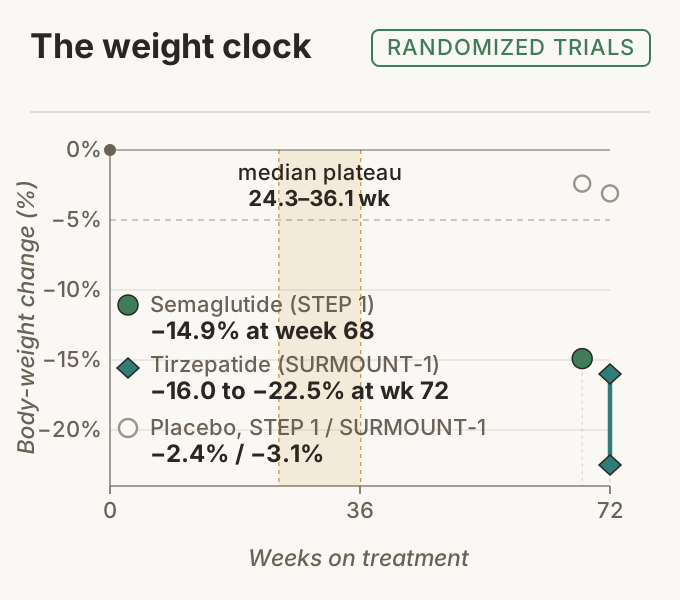
Now the clock everyone watches. In the pivotal obesity trials, average weight didn’t drop and level off in a month — it kept falling for most of a year as the dose was stepped up over months. That’s established, and the endpoints are worth seeing side by side.
| Trial (drug) | Endpoint | Average weight change | Placebo | Reached ≥5% loss |
|---|---|---|---|---|
| STEP 1 (semaglutide) | Week 68 | −14.9% of body weight | −2.4% | 86% of participants |
| SURMOUNT-1 (tirzepatide) | Week 72 | −16.0% to −22.5% (lowest–highest dose) | −3.1% | — |
Two caveats sit under that table. First, these are two separate randomized trials, not a head-to-head comparison — different people, doses, and statistical methods, so the numbers aren’t a fair “X beats Y.” Second, both were funded by the manufacturers (Novo Nordisk for STEP 1, Eli Lilly for SURMOUNT-1), and the SURMOUNT-1 primary paper sits behind a paywall — those endpoints are confirmed through Lilly’s published release and the trial abstract. The takeaway isn’t which drug wins; it’s the shape: the curve descends for months. If you judge week 8 by where the trial average lands at week 68, you’ll quit on a medicine that was doing exactly what the trial says it does.
A plateau is the finish line, not the drug quitting
Weight loss doesn’t fall forever — it plateaus. The mistake is reading that plateau as the medicine giving up. In a pooled analysis of tirzepatide trials, the average loss levelled off at a median of 24.3 weeks for people starting in the overweight range and up to 36.1 weeks for those with class III obesity — and higher doses delayed the plateau by several weeks, meaning a longer active-loss phase. Roughly 88–90% of people had plateaued by week 72; up to about 12% of responders were still losing at the end. That’s graded supported-but-limited: it’s a strong, specific analysis, but it’s one study, and tirzepatide only.
A months-in stall generally means the active-loss phase finished — the expected end of the road, not the drug switching off. Plateau is not the same word as failure.
This is exactly the moment a scale-only view misleads people, so it’s worth a fuller read on why weight loss plateaus before deciding a stall means anything is wrong.
“Slow start” is not “not working”
The scariest version of the doubt is: I’ve barely lost anything by week 12, so this isn’t for me. The data pushes back hard on that. In a SURMOUNT-1 analysis, 18% of people had lost under 5% at week 12 — the “late responders.” If a slow start doomed you, that’s where their story would end. It didn’t.
| Late responders (<5% at week 12) | Share reaching ≥5% loss |
|---|---|
| By week 24 | 70% |
| By week 72 | 90% (mean −11.0% overall) |
| True non-responders (of treated participants, week 72) | ~1.8% |
On average, those late responders took about 25 weeks to cross the 5% mark — well past the conventional 12-week check. This is supported-but-limited (again, a single post hoc analysis of one drug), but the signal is clear: a slow scale early does not reliably predict where you land later, and genuine “nothing at all” is rare. It’s the strongest reason to bring a trajectory to your clinician rather than a single weigh-in — which is exactly what our trajectory check is built to help you frame.
A slow start is a conversation, not a verdict. The data says most slow starters catch up — but it can't tell you whether to continue, switch, or reassess. That's an individual decision for you and your prescriber, informed by your trajectory, your tolerability, and your goals. This article can't make it for you, and neither can a blog that's never met you.
What the dose schedule does and doesn’t mean
One more source of confusion: the dose goes up over the first months, and people read that stepping-up as “I’m not on the real dose yet, so it’s not working.” That’s backwards. The gradual escalation is a tolerability strategy — the label states it plainly, that doses are increased stepwise “to reduce the risk of gastrointestinal adverse reactions,” with dose selection tied to “treatment response and tolerability.” It’s about easing side effects like nausea, not a countdown to when the drug switches on — stepping the dose up is a tolerability move, not a power switch. (The specific amounts and schedule are set by your prescriber, and you won’t find them here — that’s medical territory, not reading material.)
Stopping restarts the clock — backward
Because the appetite effect depends on the drug being present, stopping generally reverses it. In the STEP 1 extension, after semaglutide was withdrawn at week 68, participants regained about two-thirds of their lost weight over the following year (about +11.6 percentage points of regain, leaving a net −5.6% at week 120). That’s supported-but-limited but trending established, echoed across other withdrawal trials.
The effect lasts about as long as the drug does. That makes a GLP-1 look far more like ongoing treatment for a chronic condition than a course you finish and walk away from.
None of that means “never stop.” It means the decision to come off one is genuine — made with a prescriber, not something to infer from a plateau. Whether, when, and how to do it is covered in stopping a GLP-1.
One timeline that isn’t optional: pregnancy. These medicines aren’t recommended in pregnancy, and because the weekly agents clear the body slowly, the labels advise stopping well before a planned pregnancy — U.S. labeling for semaglutide says to discontinue at least two months ahead. If you’re pregnant, might become pregnant, or are planning to, that’s a conversation to have with your prescriber sooner rather than later.
When the timeline is worth a call
Most of the time, the honest answer to “is it working?” in the early weeks is: watch the appetite clock, give the weight clock room, and don’t judge month one by year one. But some things are worth raising sooner rather than waiting out.
Reasons to check in with your clinician: side effects that are intolerable rather than fading; no change in appetite at all after you've reached and stayed at your maintenance dose for a sustained stretch; weight regain while still on treatment; or a red-flag symptom — severe or persistent abdominal pain (especially if it radiates to the back), persistent vomiting or an inability to keep fluids down (the usual path to dehydration and, occasionally, kidney injury), or new or worsening depression, anxiety, or thoughts of self-harm. Current U.S. labeling doesn't set a numeric "stop by week X" rule — it ties decisions to your response and tolerability, which is a conversation, not a formula.
If you're having thoughts of harming yourself, don't wait for an appointment. In the U.S. you can call or text 988 (the Suicide & Crisis Lifeline) any time, or contact your local emergency number. New or worsening thoughts of self-harm are always a reason to reach out now.
If you’re not sure whether what you’re seeing is normal, that’s the whole point of bringing a trajectory — not a single number — to the person who prescribed it. A well-framed visit beats a panicked search; our guide to getting more from a clinician visit is built for exactly that.
The honest bottom line
A quiet scale in week three is not a broken medicine. It’s the second clock doing what second clocks do — running behind the first.
“How long does a GLP-1 take to work?” has two true answers, and collapsing them into one vague window is how the internet gets it wrong. The appetite clock is fast and felt — hunger and food noise often quiet within days to a couple of weeks, as steady drug levels build over the first month. The weight clock is slow and cumulative — in the trials, the average kept falling for most of a year before plateauing, and even a genuinely slow start on the scale rarely meant the drug wasn’t working. Watch the clock you can feel, give the one you can weigh some room, and bring the trajectory — not a single bad morning on the scale — to the person who prescribed it.
This article is educational and not medical advice. It describes averaged results from clinical trials; individual results vary widely, and decisions about starting, continuing, changing, or stopping any medicine belong to you and your prescriber.
Frequently asked
- How long before a GLP-1 starts working?
- Sooner than the scale shows. The appetite effect comes first — in a controlled trial, semaglutide cut how much people ate by about 24%, with less hunger and better control of eating (plus a modest, mainly first-hour slowing of gastric emptying). Weekly agents reach steady drug levels in roughly four to five weeks, and many people notice hunger and "food noise" easing within days to a couple of weeks. That subjective change is the earliest honest signal that it's doing something.
- How long does it take to see weight loss on Wegovy or Zepbound?
- Weeks to months, and it keeps going. Measurable weight loss is a lagging indicator that accumulates as your body runs a smaller daily calorie gap. In the trials the average curve fell for most of a year before flattening — to −14.9% at 68 weeks for semaglutide and −16.0% to −22.5% at 72 weeks for tirzepatide. There's no guaranteed "by week X" number for any individual; the trials describe averages, and people vary widely around them.
- Does a slow start mean the medication isn't working?
- Usually not. In a SURMOUNT-1 analysis, people who'd lost under 5% at week 12 were labeled "late responders" — yet 70% of them reached at least 5% by week 24 and 90% by week 72, taking on average about 25 weeks to cross 5%. Only about 1.8% of the tirzepatide-treated participants in the analysis were true non-responders at the end. A slow scale is common and doesn't reliably predict failure — but whether to continue is a trajectory conversation with your clinician, not a self-diagnosis.
- When does weight loss stop on a GLP-1?
- It plateaus — and a plateau is expected, not the drug failing. In a tirzepatide analysis the average loss levelled off at a median of about 24 to 36 weeks depending on starting BMI, with higher doses extending the active-loss phase by several weeks. A months-in stall generally means the active-loss phase finished, not that the medicine quit. Our plateau explainer goes deeper.
- What happens if I stop taking it?
- Weight tends to come back. In the STEP 1 extension, after semaglutide was stopped at week 68 participants regained about two-thirds of their lost weight over the following year. That points to a medicine that manages an ongoing condition rather than a time-limited course — but if, when, and how to stop is a decision for you and your prescriber, covered in stopping a GLP-1.
Sources (9)
Every claim on this page traces to a primary source — and we sell you nothing. No sponsors, no affiliate links, no ads.
- 7 randomized trials
- 1 news / agency
- 1 FDA labels
More like this