GLP-1 medicines and menopause: what actually helps, and what's hype
The short answer
In menopause, the honest picture separates three things people blur together. First, menopause does shift fat toward the belly and impose a modest metabolic headwind — but 'menopause makes you gain weight' as a simple direct cause is disputed; total gain tracks more with aging and lifestyle. Second, GLP-1 medicines work about as well in peri- and postmenopausal women as in younger women — roughly 23% vs 26% weight loss in a menopause-stratified analysis of the tirzepatide trials — so this part is real, though menopause is not an approved use (it's off-label). Third, the safety angle that matters most here is muscle and bone: some of the weight lost is muscle, and bone density dips modestly with the weight loss — but that looks weight-driven rather than a direct bone toxin, and no increase in fractures has been shown (diabetes trials even hint at fewer). The headline extras are where hype lives: the 'hormone therapy makes GLP-1s work 35% better' claim comes from one small, non-randomized study its own authors say can't prove cause, and there is no verified evidence that GLP-1s relieve hot flashes. Every specific decision belongs with a clinician who knows your history.
Evidence grade
Strong evidenceRung 2 of 8 · Supported but limitedLast reviewed

The Evidence Ladder
Real human evidence, but narrow in population, use, or scale.
↑ Stronger — proven in people
- 1Established
- 2Supported but limited
- 3Emerging
- 4Observational only
- 5Preclinical
- 6Anecdotal
- 7Speculative
- 8Unsafe to state
↓ Weaker — theory only
Key takeaways
- 01Menopause shifts fat to the belly and nudges metabolism down — but it isn't a simple cause of weight gain. Fat redistribution tracks estrogen loss; total weight gain tracks more with aging and activity. The distinction changes what actually helps.
- 02These drugs work about as well in menopausal women. In a menopause-stratified analysis of the tirzepatide trials, weight loss was ~23% (peri- and postmenopausal) vs ~26% (premenopausal) — a difference the authors called not clinically meaningful. Graded supported but limited; menopause is off-label.
- 03Muscle and bone are the real safety story here. Some of the weight lost is muscle, and bone density dips modestly — but that looks driven by the weight loss itself, not a direct bone toxin, and no rise in fractures has been shown (diabetes trials hint at fewer). Protein + resistance training is the standard mitigation.
- 04The hormone-therapy claims are where hype lives. “Hormone therapy makes GLP-1s work 35% better” comes from one 120-person, non-randomized study its authors say can't prove cause. And there is no verified evidence GLP-1s relieve hot flashes — despite the marketing.
- 05The contraception catch still applies in perimenopause. If you can still ovulate and use oral birth control, tirzepatide can make the pill less reliable (semaglutide doesn't) — and none of these medicines is recommended in pregnancy. Not a self-directed protocol.
On this page8 sections
- Is menopause really making weight harder?
- Do GLP-1 medicines work in menopausal women?
- Muscle and bone: the safety angle that matters most here
- Hormone therapy: absorption, and the “35% synergy” headline
- Hot flashes: the clearest overreach
- Hype vs. reality
- Questions to ask a clinician
- Red flags / when to seek care
- Sources (9)
If you’ve hit midlife and watched the same habits stop working, you’ve probably been sold two stories at once: that menopause is the villain behind every extra pound, and that a GLP-1 medicine is the fix. The honest version is more useful than either — and it starts by pulling apart three things the marketing blurs together: what menopause actually does to your body, how well these drugs really work in menopausal women, and which of the popular claims the evidence simply doesn’t support.
Is menopause really making weight harder?
Partly — and the specifics matter, because they change what helps. The best-supported piece is fat redistribution: as estrogen falls across the menopausal transition, deep abdominal (visceral) fat climbs from roughly 5–8% to 15–20% of total body fat. That shift is real and metabolically meaningful. There’s also a modest metabolic headwind: a 2023 systematic review found that giving estrogen raised resting energy expenditure by up to ~200 calories a day, which implies losing estrogen nudges resting metabolism down a little — graded supported but limited.
What the evidence does not cleanly support is the simplest version of the story — that menopause by itself makes you gain weight. Reviews find that total fat gain in midlife tracks more with chronological aging and falling activity, while it’s the distribution of fat, toward the belly, that tracks with menopause specifically. Age-related muscle loss (about 3–8% per decade after 30) compounds it, but that’s largely an aging phenomenon too. So the honest grade for “menopause causes weight gain” as a direct cause is disputed/mixed.
Menopause changes where your body stores fat more than whether it stores it. That’s not a technicality — it’s why the fixes that work are the boring ones: muscle, protein, movement.
Do GLP-1 medicines work in menopausal women?
Yes — and unusually for a women’s-health question, this isn’t just extrapolation. The strongest menopause-specific evidence is a 2025 analysis of the tirzepatide (Mounjaro/Zepbound) trials that grouped 2,542 women by reproductive stage. The weight loss looked like this:
| Reproductive stage | Weight loss at 72 weeks (tirzepatide) | Placebo |
|---|---|---|
| Premenopausal | ~26% | 2–3% |
| Perimenopausal | ~23% | 2–3% |
| Postmenopausal | ~23% | 2–3% |
The authors found a barely-detectable edge for premenopausal women and judged it “not clinically meaningful,” concluding the drug worked “irrespective of reproductive stage.” Because this is a post hoc subgroup analysis — not a trial built to test menopause — we grade it supported but limited rather than settled. But it’s real menopause-stratified trial data, not hand-waving. (Semaglutide’s menopause-specific data is thinner, though its trials included many midlife women.) The plain reading: these medicines don’t stop working because you’re in menopause. They just aren’t approved for menopause — that use is off-label.
One caveat that matters most for this audience: these medicines are approved by weight and health thresholds, and belly-fat redistribution at an otherwise healthy weight is not, by itself, a reason to take one. For a woman who is lean or of normal weight, the muscle- and bone-loss trade-offs below weigh more heavily than any benefit — whether you’re a candidate at all is a screening decision for a clinician. (These are still powerful medicines with the usual GLP-1 risks and a boxed thyroid warning — see the safety essentials below.)
Muscle and bone: the safety angle that matters most here
This is where a menopausal reader deserves the most care, because two different worries get tangled — and postmenopausal bodies are already losing both muscle and bone.
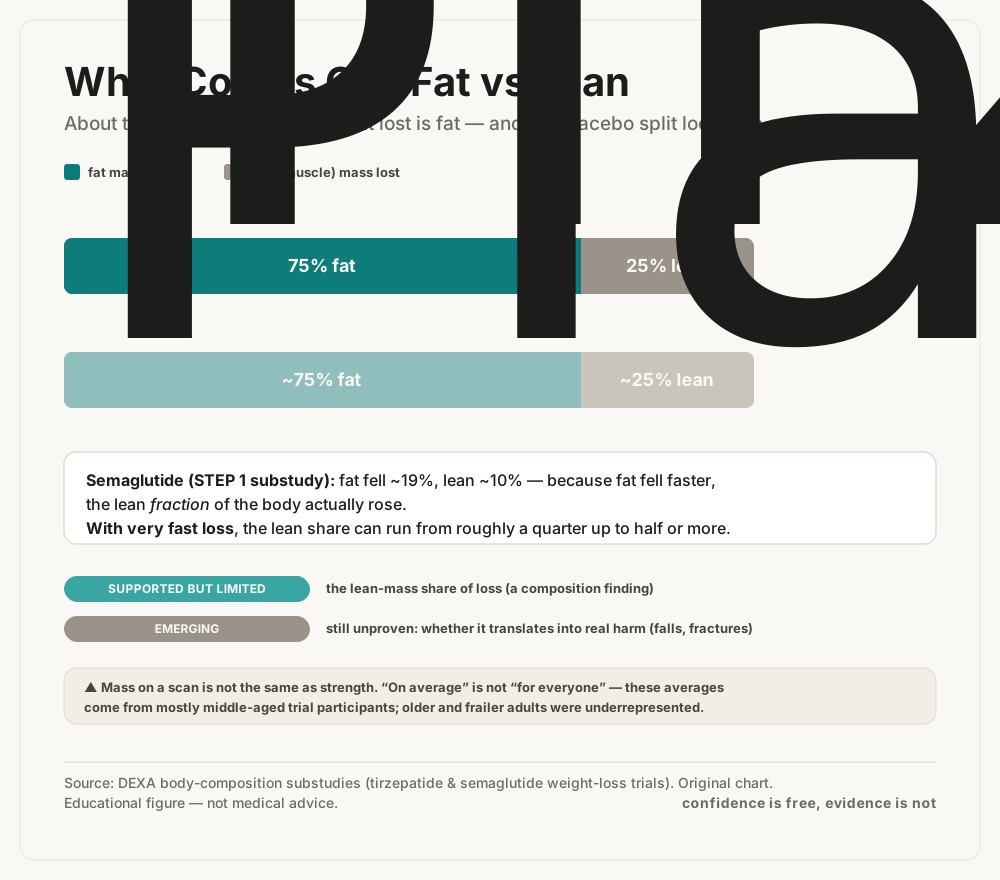
Muscle. GLP-1 weight loss isn’t pure fat. DEXA body-composition analyses put the lean-mass share of the loss somewhere between about a quarter and 40% — closer to a quarter in the tirzepatide (SURMOUNT-1) data, and about 40% in an exploratory analysis of the semaglutide STEP 1 trial. Two honest caveats pull in opposite directions: that ratio is typical of any large weight loss, not unique to the drug — and because fat fell faster than muscle, the proportion of lean mass in the body actually improved. Still, in a group already shedding muscle to age, losing more to fast weight loss is a real concern, and the standard answer is well-established: enough protein plus resistance training.
Bone. Postmenopausal women lose bone fast once estrogen drops, so “does weight loss make it worse?” is the sharp question. The most relevant trial ran specifically in adults at increased fracture risk — 64 people, 55 of them postmenopausal women, average age 63. Over a year, semaglutide lowered hip and spine bone density modestly versus placebo. But the researchers concluded the effect looked driven by the weight loss itself rather than a direct hit to bone — the markers of bone formation weren’t harmed. Less body weight means less load on bone, and density adjusts down; that happens with any weight loss, not just these drugs.
Does that mean more broken bones? So far, no. A 2025 meta-analysis of 44 trials in people with diabetes found GLP-1 users actually had a lower fracture risk (relative risk 0.77). Two limits keep this honest: those were diabetes trials, not menopausal weight-loss patients, and fractures were counted as incidental events, not the main outcome. So the fair summary: bone density dips modestly with the weight loss, but no fracture increase has been shown — and there may even be a protective signal. Don’t let anyone alarm you that these drugs “destroy your bones,” and don’t let anyone wave the BMD finding away either.
One real exception to the reassurance: if you already have osteoporosis, low bone density, or a past fragility fracture, the “no fracture increase” data doesn’t come from women like you — it’s mostly from people with diabetes, counted incidentally. That’s a reason to talk about a baseline bone-density (DXA) scan and a sensible pace of loss before starting, not after.
Hormone therapy: absorption, and the “35% synergy” headline
Two very different things travel under “GLP-1s and hormone therapy.”
First, absorption. Tirzepatide slows the stomach, which can blunt absorption of pills taken at the same time. Its label warns this can make oral birth-control pills less reliable. Whether it does the same to the oral estradiol in menopausal hormone therapy has not actually been studied — extending the contraceptive warning to hormone therapy is a reasonable guess, not an established fact, so we won’t state it as one. (Estrogen delivered through the skin — patches and gels — bypasses the stomach, so this interaction wouldn’t be expected, though that hasn’t been formally tested either.) Semaglutide, by contrast, doesn’t meaningfully affect oral-medication absorption and carries no such warning.
| Affects oral-pill absorption? | On the label? | |
|---|---|---|
| Tirzepatide (Mounjaro/Zepbound) | Yes, for oral contraceptives | Yes — backup/non-oral method advised |
| Semaglutide (Ozempic/Wegovy) | Not meaningfully | No warning |
| Oral menopausal estradiol (either drug) | Not studied — unknown | No label guidance |
| Transdermal estrogen (patch/gel) | Bypasses the gut | — |
Second, the synergy headline. A 2026 study reported that postmenopausal women on tirzepatide who also used hormone therapy lost about 35% more weight. It’s an eye-catching number — and it’s from a retrospective look at 120 women, not a randomized trial. The authors say so plainly: they can’t tell whether hormone therapy caused the extra loss or whether the women using it simply differed in other ways. Treat it as a hypothesis worth testing, not a reason to start hormone therapy to lose weight.
A 35%-better headline from 120 charts is a question, not an answer. The difference between “interesting association” and “proven cause” is exactly the difference this whole site exists to hold.
Hot flashes: the clearest overreach
Here the hype is thickest and the evidence is thinnest. There is no verified trial showing GLP-1 medicines relieve hot flashes or night sweats. Marketing pages sometimes cite a “2023 menopause-society abstract” about fewer hot flashes on semaglutide — but that specific abstract can’t be located or verified, so it doesn’t count as evidence. If a woman feels better in this respect, it’s more likely downstream of better sleep, mood, or confidence from losing weight than a direct effect on hot flashes. The honest line: these are not a treatment for menopausal symptoms, and no good evidence says otherwise. (The actual non-hormonal drug approved for hot flashes, fezolinetant, works by a completely different mechanism.)
Hype vs. reality
- Holds up: menopause shifts fat to the belly and adds a modest metabolic headwind; and GLP-1s work about as well in postmenopausal women as in younger women. That’s the legitimate core.
- Outruns the data — hormone-therapy “synergy”: a single 120-person retrospective study its own authors say can’t prove cause.
- Outruns the data — hot flashes: no verifiable trial supports symptom relief.
- Mis-told both ways — bone: density dips with the weight loss (mostly shown in postmenopausal women), it looks weight-mediated, and no fracture increase has appeared.
- The dangerous half-truth — “they mess with your hormones”: true and label-backed for tirzepatide + oral contraceptives, unstudied for oral hormone therapy, and essentially absent for semaglutide.
Questions to ask a clinician
- Given my age, my bone health, and whether I’m on hormone therapy, is a GLP-1 a reasonable option — and what are we actually trying to achieve?
- How do we protect my muscle and bone while I lose weight — protein, resistance training, the right pace, and should we check bone density or body composition?
- I take oral hormone therapy (or the pill) — does my specific medicine affect it, and would a patch or a backup method be smarter?
- If I’m still perimenopausal and could become pregnant, what contraception and what plan should we have?
- How will we tell whether this is working well enough to continue, and what’s the maintenance plan?
Red flags / when to seek care
- You’re perimenopausal, could still ovulate, take tirzepatide with oral birth control, and have had no backup method — check in promptly about pregnancy risk (and remember these medicines aren’t recommended in pregnancy).
- New or worsening bone pain, a fall, or a fracture from a minor knock — worth prompt evaluation, especially with known low bone density.
- Rapidly losing strength, feeling persistently weak or unsteady, or losing weight much faster than expected — tell your clinician; that’s a signal, not discipline.
- Severe or persistent abdominal pain, signs of dehydration from vomiting or diarrhea, or an allergic reaction are urgent regardless. Because these drugs slow the stomach, tell any surgical or anaesthesia team that you take one.
This page describes what is studied and claimed; it does not recommend any medicine, dose, or source, and it is not a substitute for individual medical advice. Menopause, hormone therapy, and bone-health decisions are specific to you and belong with a qualified clinician.
Sources (9)
Every claim on this page traces to a primary source — and we sell you nothing. No sponsors, no affiliate links, no ads.
- 3 randomized trials
- 2 meta-analyses
- 2 FDA labels
- 1 reviews
- 1 observational studies