How long does a GLP-1 stay in your system? Half-life explained
The short answer
GLP-1 medicines are weekly because they clear the body slowly. Semaglutide (Ozempic/Wegovy) has an elimination half-life of about one week, and its label says it stays in the circulation for about five weeks after the last dose. Tirzepatide (Mounjaro/Zepbound) has a half-life of about five days, so it takes on the order of three to four weeks to wash out. That long tail is why a weekly shot works steadily — and why side effects, and the drug's effects, can linger for weeks after someone stops. One labeled consequence: because semaglutide clears so slowly, its label advises stopping it at least two months before a planned pregnancy — a timing decision to make with a prescriber.
Evidence grade
Strong evidenceRung 1 of 8 · EstablishedLast reviewed
The Evidence Ladder
Consistent, strong human evidence; an approved drug for its approved use.
↑ Stronger — proven in people
- 1Established
- 2Supported but limited
- 3Emerging
- 4Observational only
- 5Preclinical
- 6Anecdotal
- 7Speculative
- 8Unsafe to state
↓ Weaker — theory only
Key takeaways
- 01Semaglutide's half-life is about one week; its label states it stays in circulation for roughly five weeks after the last dose.
- 02Tirzepatide's half-life is about five days, so it takes on the order of three to four weeks (about five half-lives) to clear.
- 03The long half-life is exactly why these are once-weekly medicines — levels stay steady between doses.
- 04Because the drug clears slowly, side effects and appetite effects can linger for weeks after stopping — they don't switch off the day you stop.
- 05Semaglutide's label advises stopping it at least two months before a planned pregnancy because it clears so slowly. That's a conversation for your prescriber.
On this page6 sections
“How long does it stay in my system?” is one of the most-searched GLP-1 questions, and the answer explains several things at once: why these are weekly shots, why side effects don’t vanish the day you stop, and why the pregnancy-timing advice looks the way it does. This is a pharmacology page — it explains how the drug clears, not how to dose it. Any timing decision belongs with your prescriber.
Half-life, in plain English
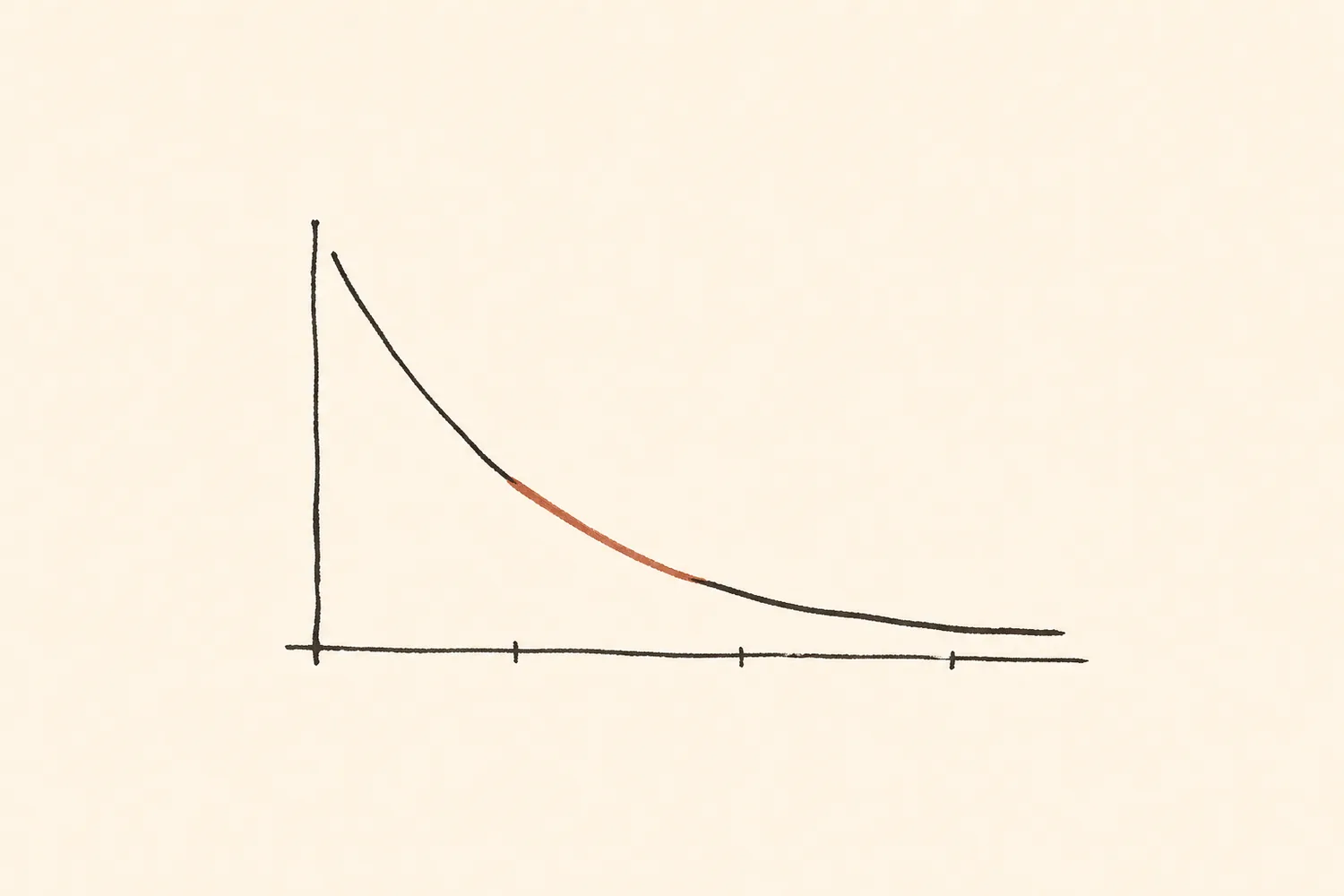
“Half-life” is the time it takes your body to clear half of a drug. After about five half-lives, a drug is mostly gone. The two main GLP-1 medicines have very different half-lives:
- Semaglutide (Ozempic, Wegovy) has an elimination half-life of about one week. Its FDA label states plainly that “semaglutide will be present in the circulation for about 5 weeks after the last dose.”
- Tirzepatide (Mounjaro, Zepbound) has an elimination half-life of about five days. By the usual “five half-lives to clear” rule, that works out to about three to four weeks to wash out. (The five-week figure for semaglutide is stated on the label; the three-week figure for tirzepatide is the standard calculation from its labeled five-day half-life, not a number printed on the label.)
Why that makes them weekly medicines
A long half-life is a feature, not a bug. Because the drug leaves so slowly, the level in your blood stays relatively steady from one weekly dose to the next — you don’t get the sharp peaks and troughs a short-acting daily drug would give. That steadiness is part of why a once-weekly injection can quietly manage appetite and blood sugar around the clock. It’s also why missing a dose by a day or two usually isn’t a crisis (though the exact rule differs by drug — see the missed-dose page).
Why side effects linger after you stop
The flip side of a long half-life: when you stop, the drug — and its effects — fade out over weeks, not hours. For semaglutide, meaningful amounts are still in your system for about five weeks after the last dose. That means:
- Side effects can persist for a while after stopping. Nausea or reduced appetite don’t necessarily end the day you skip a dose.
- Appetite returns gradually, not instantly, as levels fall — which is part of why weight regain after stopping tends to unfold over months rather than immediately.
This is worth knowing so a lingering effect after stopping doesn’t feel alarming or unexpected; it’s the predictable tail of a slow-clearing drug.
The pregnancy-timing point
There’s one place the long half-life turns into a specific, labeled instruction. Because semaglutide clears so slowly, the Wegovy label advises discontinuing it at least two months before a planned pregnancy — the idea being to let the drug wash out well before conception. GLP-1 medicines are not recommended in pregnancy. Tirzepatide’s label does not give a specific preconception washout number — but no stated number doesn’t mean no wait; that timing is still a prescriber decision. Either way, when to stop before trying to conceive is a decision to plan with your prescriber, not to self-manage — and it connects to contraception, which we cover on the birth-control page.
What about before surgery?
Because these drugs slow the stomach, a separate question is whether to pause them before surgery or a procedure with sedation — an aspiration-risk issue that is its own topic. That “hold” decision is not about full clearance and is made with your surgical and anesthesia team; see the surgery page.
Frequently asked questions
How long does Ozempic stay in your system after the last dose? Semaglutide (the drug in Ozempic and Wegovy) has a half-life of about one week, and the label states it stays in the circulation for about five weeks after the last dose. So its effects fade over roughly a month rather than stopping abruptly.
How long does tirzepatide (Mounjaro/Zepbound) take to leave your body? Tirzepatide’s half-life is about five days, so by the usual “five half-lives” rule it takes on the order of three to four weeks to clear. That figure is a calculation from the labeled half-life rather than a number stated on the label.
Why do side effects continue after I stop the medication? Because the drug clears slowly. For weeks after the last dose there’s still drug in your system, so nausea, reduced appetite, and other effects taper off gradually rather than ending immediately.
Sources (3)
Every claim on this page traces to a primary source — and we sell you nothing. No sponsors, no affiliate links, no ads.
- 3 FDA labels