Method
How we grade evidence: the 8-rung ladder in plain English
How we grade evidence: the 8-rung ladder in plain English
Two claims can sound identical and deserve opposite amounts of trust. The Evidence Ladder is how we tell them apart — and how you can too.
“Semaglutide causes major weight loss.” “This peptide reverses aging.” Read quickly, both sound like the same kind of statement — a confident claim about what a molecule does. They are not the same kind of statement at all. One is backed by tens of thousands of people in randomized trials. The other is backed by a mechanism, a hope, and a supplement label.
The problem with the way most health content handles this is that it gives you a verdict — true, false, “doctors are divided” — when what you actually need is a position: how much weight can this claim bear before it breaks?
That’s what the Evidence Ladder is. Eight rungs, strongest at the top.
The eight rungs
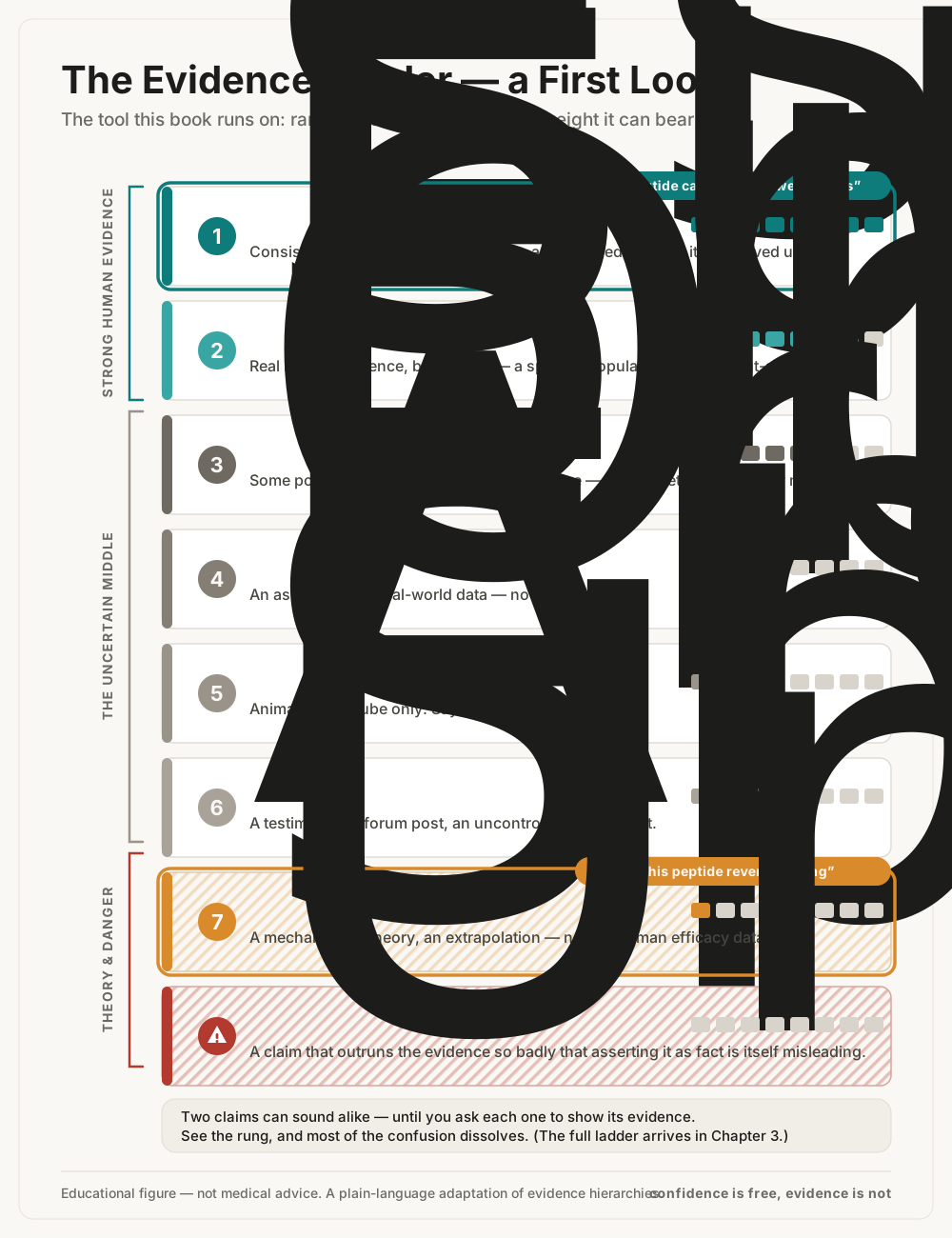
- Established — consistent, strong human evidence. An approved drug used for its approved purpose. You can lean on it.
- Supported but limited — real human evidence, but narrow: a specific population, or solid-but-small data.
- Emerging — some positive human data, not yet conclusive, sometimes internally mixed.
- Observational only — an association in real-world data. It may be real; it does not prove cause.
- Preclinical — animal or test-tube only. Say it out loud: “in mice.”
- Anecdotal — a testimonial, a forum post, an uncontrolled case report.
- Speculative — a mechanism or theory with no real human efficacy data at all.
- Unsafe to state — a claim that outruns the evidence so badly that asserting it as fact is itself misleading.
Why a ladder, not a thumbs-up
Three things happen once you rank a claim instead of judging it.
The confusion dissolves. “Semaglutide causes major weight loss” is rung 1. “This peptide reverses aging” is rung 7. They sound alike; they sit six rungs apart. You stop arguing about whether something is “true” and start asking what kind of evidence is under it.
You can hold two thoughts at once. A drug can be genuinely effective (rung 1 for weight loss) and carry a real but uncertain safety signal (rung 4 for some rare event). A verdict forces you to pick a side. A ladder lets you be precise about both.
Hype gets nowhere to hide. Most overreach works by borrowing the confidence of rung 1 for a claim that actually lives on rung 6. Once you can name the rung, the borrowed confidence evaporates. That is the whole trick, and it is free.
Most overreach works by borrowing the confidence of rung 1 for a claim that lives on rung 6. Name the rung, and the borrowed confidence evaporates.
How to use it tomorrow
Next time you read a striking claim about a GLP-1 medicine — in a headline, a video, a comment — don’t ask “is this true?” Ask “what rung is this on?” Is it from a randomized trial, or a study in mice, or a person who swears it worked? The answer usually tells you how much to bet.
That single habit will protect you from most of the noise. And when you want the rung looked up for you, that’s what the rest of this site is for: every answer in the Evidence Library carries its rung, in plain sight, with the sources underneath.
Confidence is free. Evidence is not. The ladder is how we keep the two from being confused.
More like this