The GLP-1 operating system
Know what's actually true about GLP-1s.
Ozempic, Wegovy, Mounjaro — the noise is enormous and most of it is selling you something. Bring the question that's actually on your mind and get a straight,evidence-graded answer.
Every answer graded on the evidence · 278+ primary sources · no doses, no sourcing, nothing to sell you but a book
Your toolkit
Free, private tools — built to help you think
Myth vs Evidence
The claims everyone repeats — graded
“Ozempic destroys your muscle.”
Strong evidenceRung 2 of 8 · Supported but limitedMisleading overstatement of a real effect"Destroys" implies the medicine actively breaks down muscle. What the evidence actually shows is that lean-mass loss accompanies rapid weight loss in general. Whether — and how much — protein intake and resistance training preserve muscle in this specific setting is still an active research question, and a good one to raise with a clinician. That is a very different statement from "the drug destroys your muscle."
See the evidence →“Microdosing GLP-1s avoids side effects.”
Theory onlyRung 7 of 8 · SpeculativeUnsupportedIt repackages ordinary low-dose titration as a novel hack. "Avoids side effects" overpromises: a lower dose reduces but does not eliminate risk. It can also backfire — a dose chosen mainly to minimize side effects can be too low to actually control blood sugar or deliver the cardiometabolic benefit someone needs, which is its own hazard. And unstandardized dosing — often from non-pharmacy sources — adds dangers that have nothing to do with the dose size.
See the evidence →“Retatrutide is safer than tirzepatide.”
Theory onlyRung 8 of 8 · Unsafe to stateUnsafe to stateA comparative-safety claim needs head-to-head, long-term data that does not yet exist. Calling an unapproved drug "safer" than an approved one inverts what the evidence can support — and this exact framing is often used to steer people toward grey-market sources. Because it isn't approved, anything sold to consumers as "retatrutide" today comes from unregulated sources, and there is no way to verify what is actually in the vial.
See the evidence →
Start where you are
Where are you in your GLP-1 journey?
The knowledge base
Answers to what everyone's asking
- Rung 1 · Established
What is a GLP-1? A plain-English guide to how these medicines work
GLP-1 (glucagon-like peptide-1) is a hormone your gut releases after you eat; it nudges insulin up, glucagon down, stomach-emptying slower, and appetite lower. The medicines people call 'GLP-1s' — semaglutide (Ozempic/Wegovy), tirzepatide (Mounjaro/Zepbound), and others — are engineered drugs that switch on the same receptor as that natural hormone, but are built to last days instead of minutes. They're approved to treat type 2 diabetes and, for several products, obesity; the most common side effects are gastrointestinal.
Read the evidence →Strong evidenceRung 1 of 8 · Established - Rung 1 · Established
GLP-1 medicines compared: every brand, side by side
The GLP-1 brands map onto just a few molecules: Ozempic, Wegovy and Rybelsus are all semaglutide (Novo Nordisk); Mounjaro and Zepbound are both tirzepatide (Eli Lilly); and Foundayo is orforglipron, a newer pill. Within each molecule, the different brand names mostly reflect the approved use (diabetes vs weight management) and how you take it (weekly injection vs daily pill) — not a different drug. Average weight loss runs about 15% for semaglutide, ~20% for tirzepatide, and ~11% for the orforglipron pill in their main trials.
Read the evidence → - Rung 2 · Supported but limited
GLP-1 muscle loss: what the evidence really says
Like any substantial weight loss, the weight people lose on GLP-1 medicines is a mix of fat and lean (muscle) mass, and the lean portion is broadly in the range seen with diet-based weight loss. What protects muscle is not the drug but adequate protein and resistance training. Whether the lean-mass loss on these drugs causes lasting harm to strength or function is still being studied.
Read the evidence → - Rung 1 · Established
GLP-1 medicines by the numbers: the key statistics, honestly sourced
These are trial averages from separate studies — not head-to-head, and not a prediction for any one person. Average weight loss ran about 21% for tirzepatide (Zepbound, SURMOUNT-1), about 16–17% for the oral-semaglutide pill (OASIS), about 15% for semaglutide (Wegovy, STEP 1), and about 11% for the orforglipron pill (Foundayo, ATTAIN-1); the investigational triple-agonist retatrutide reported about 28% at its top dose in a phase-3 readout that isn't yet published. The most common side effects are gastrointestinal (on the Wegovy label, nausea 44% vs 16% on placebo). Serious problems (gallbladder disease, pancreatitis) are uncommon; a rare eye condition (NAION) is an emerging, unproven signal. After stopping, trials show most of the lost weight returns over about a year. This page collects the key numbers, each tied to its source and labeled by how strong that evidence is.
Read the evidence → - Rung 2 · Supported but limited
How much protein do GLP-1 users need? Evidence, not hype
Strong evidence shows that a higher-protein diet plus resistance training preserves more muscle during any weight loss, and that a meaningful share of GLP-1 weight loss is lean mass — so protein matters more, not less, when appetite drops. But the single optimal protein target for GLP-1 users specifically has not been established, so general higher-protein ranges studied during dieting are a starting point to personalize with a clinician, not a fixed prescription.
Read the evidence → - Rung 1 · Established
Semaglutide vs tirzepatide: how they really compare
Both are highly effective GLP-1-based medicines with broadly similar gastrointestinal side-effect profiles and the same class warnings (boxed rodent-thyroid, pancreatitis, gallbladder, hypoglycemia in combination). The clearest difference is average weight loss: in the head-to-head SURMOUNT-5 obesity trial, tirzepatide produced more weight loss than semaglutide (−20.2% vs −13.7% at 72 weeks), and tirzepatide is a dual GIP/GLP-1 agonist while semaglutide acts on GLP-1 alone. But 'more on average' is not 'right for you.' A few genuinely drug-specific points matter: tirzepatide's label carries an oral-contraception warning that semaglutide's does not; semaglutide's diabetes label carries a diabetic-retinopathy warning; the NAION eye signal is better characterized for semaglutide; and the cardiovascular evidence differs in kind (semaglutide has placebo-controlled obesity outcomes from SELECT; tirzepatide has an active-comparator non-inferiority diabetes trial, SURPASS-CVOT). Which drug, and whether to switch, is a clinician decision.
Read the evidence →
By the numbers
How much weight do these actually take off?
Average results from the major trials — the real scale, with the honest caveats.

Evidence you can use
The decisions happen at the kitchen table, not in a journal
Protein at every meal. A side effect at 9pm. Whether to keep going. We translate the trials into the small, real choices a medicine actually puts in front of you — graded, sourced, and free of anything to sell you.
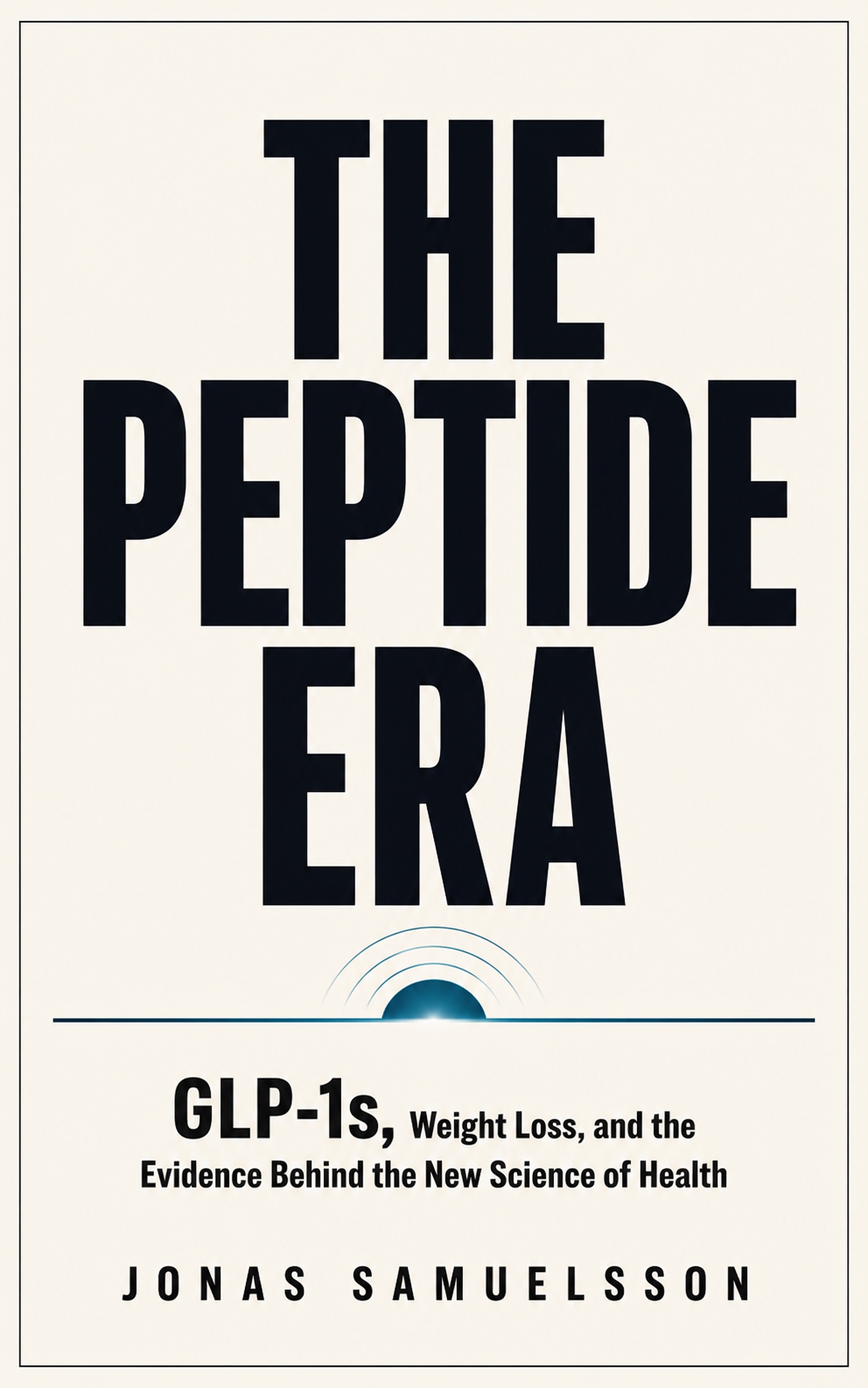
The book this site runs on
Everything here is a free taste of The Peptide Era
The same Evidence Ladder, the same honest grading, the same “we sell you nothing but a book” promise — 24 chapters deep, plain-language, every claim sourced. No doses, no sourcing, no hype. Just the clearest map of GLP-1 medicines you can buy.
Get the ebook — $11.99What’s inside →
Instant download · read on any device · no account, no subscription.